Aftermath|Residues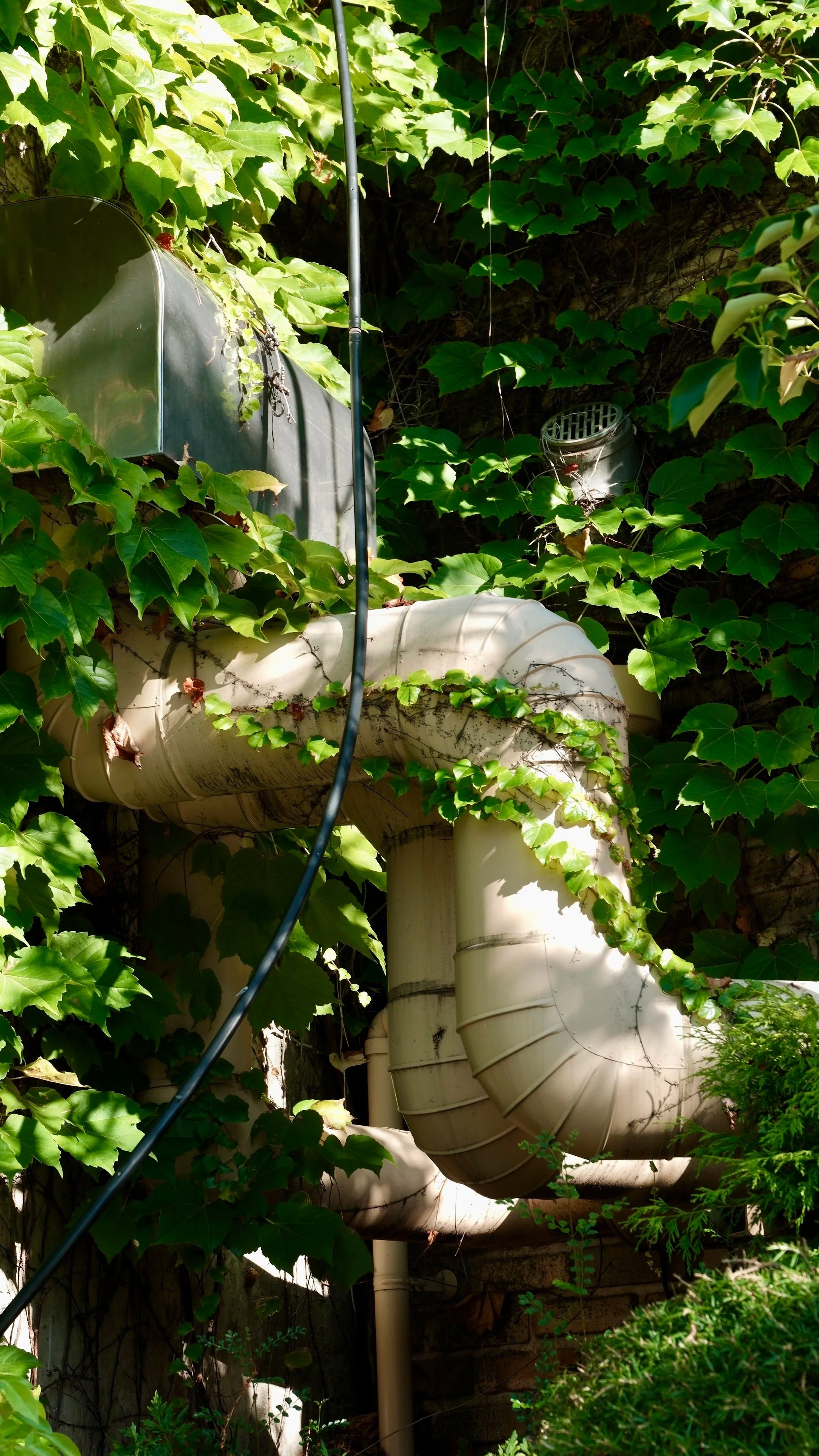
Taken on mountain slopes in Shanxi and across remote landscapes in Japan, these photographs began with a simple assumption: that altitude might bring distance from the systems humans build.
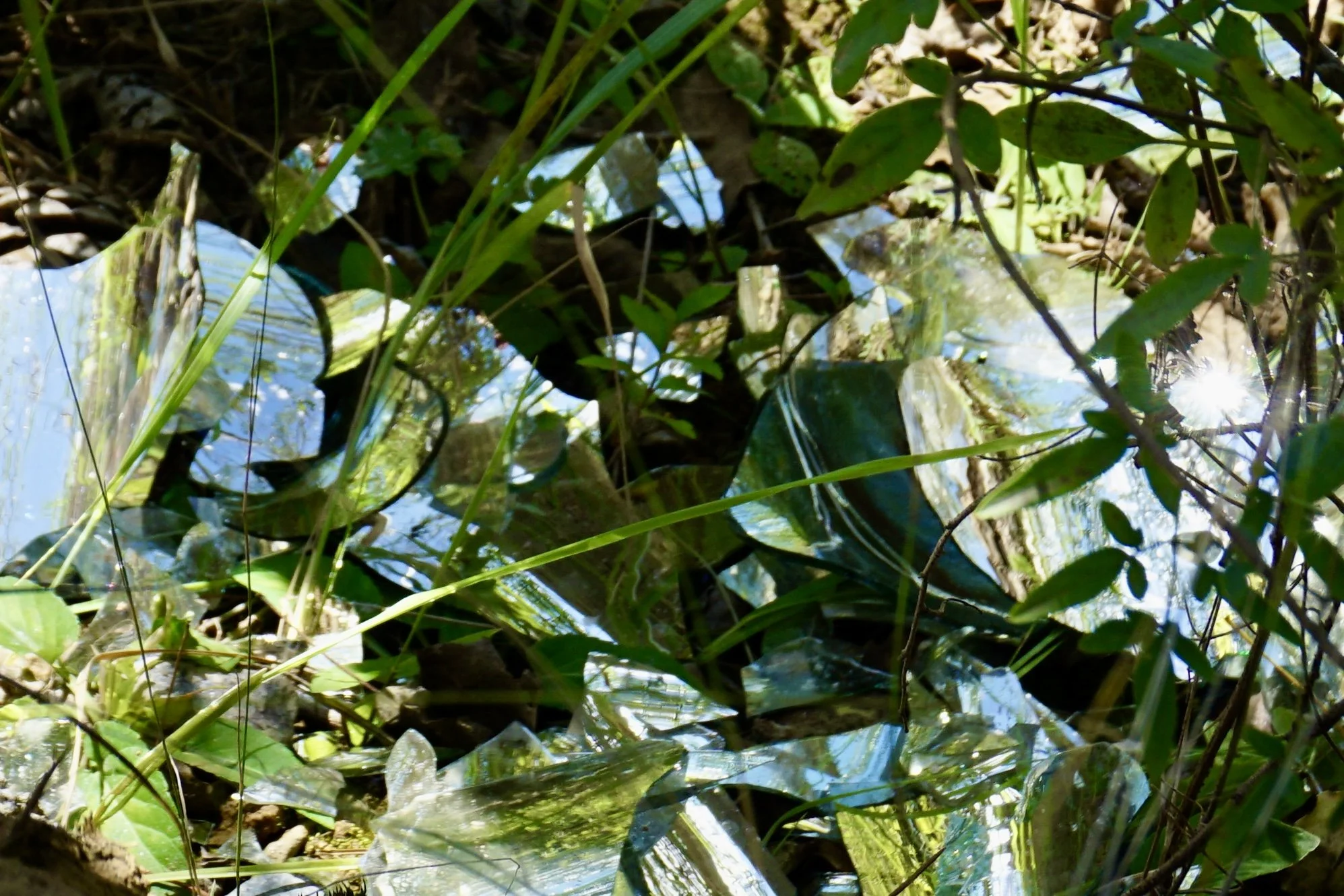
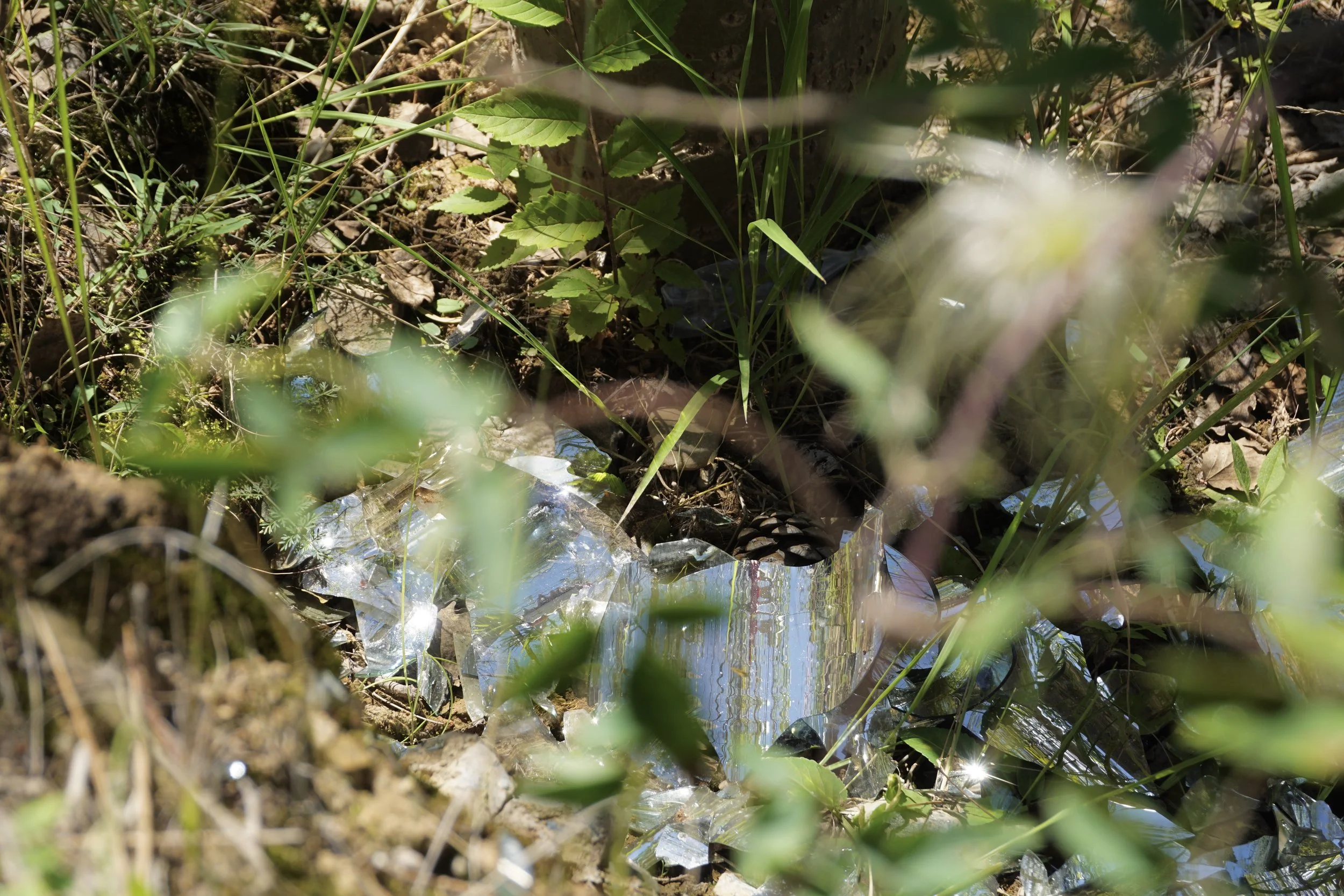
Instead, the climb revealed something else. Pipes ran through stone walls where forests should have been uninterrupted. Fragments of glass lay scattered among roots and pine needles. Even at elevation, traces of construction remained.
In mathematics, a residual is the difference between a model and reality—the portion that refuses to be explained away.
These landscapes hold their own residuals. Human systems attempt permanence through geometry, infrastructure, and design. Yet vines follow the curves of abandoned pipes. Broken surfaces reflect trees that grow without regard for their presence.
The structures remain, but their purpose fades. What is left behind becomes part of another system entirely.
The Landscape Returning
Broken glass reflects the canopy above it, holding the image of trees that will long outlive the hands that shaped it. What was manufactured to impose clarity now dissolves into reflection. The shards no longer serve their original purpose; they simply return the gaze of the landscape that is quietly reclaiming them.
What Remains
Glass once existed to contain and clarify, to hold the world within clean boundaries. Here it lies scattered among soil and roots, its surface fractured but still catching light. The forest does not reject it. Instead, it folds the fragments into its own slow order, as if permanence were always a temporary idea.